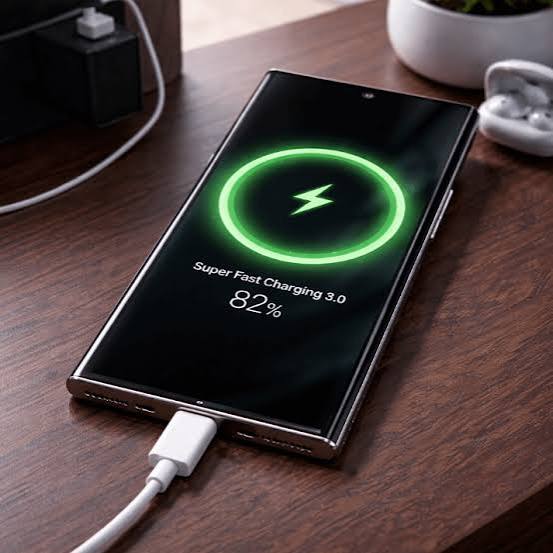
Smartphones have become an essential part of everyday life, and battery life is one of the most important factors for any mobile user. Whether you use your phone for social media, gaming, video streaming, online work, photography, or communication, running out of battery can be frustrating. This is why Super Charge Fast Charging technology has become increasingly popular among smartphone users.
Instead of waiting for several hours to fully charge a phone, fast-charging technology can deliver a much higher amount of power during the charging process. Depending on the smartphone, charger, battery capacity, temperature, and charging protocol, a compatible system can significantly reduce charging time.
The term SuperCharge is also used by certain smartphone manufacturers for their proprietary fast-charging technologies. Because charging speeds and standards vary between brands and models, users should always check the specifications of their particular phone and charger rather than assuming that every “Super Charge” charger will provide the same performance.
In this complete guide, we will explain what Super Charge Fast Charging means, how fast charging works, what affects charging speed, the importance of chargers and cables, battery health, safety tips, common problems, benefits, limitations, and frequently asked questions.
What Is Super Charge Fast Charging?
Super Charge Fast Charging refers to a high-speed charging technology designed to recharge a smartphone battery more quickly than conventional charging.
A normal charger may provide relatively low charging power, while a fast-charging system can deliver substantially more power when the phone, charger, cable, and charging protocol are compatible.
Charging power is generally measured in watts (W).
The basic relationship is:
Power (W) = Voltage (V) × Current (A)
For example, a charging system operating at 10 volts and 5 amps can theoretically provide 50 watts of power.
Actual charging performance is more complicated because the phone continuously manages voltage, current, temperature, battery level, and other factors.
How Super Fast Charging Works
Fast charging is not simply about forcing maximum electricity into a battery.
Modern smartphones use charging controllers and battery-management systems to regulate the charging process.
When a compatible charger is connected, the phone and charger can communicate to determine an appropriate charging level.
The phone may initially accept higher power when the battery is at a lower charge level. As the battery approaches a higher percentage, the charging speed usually decreases.
This gradual reduction helps manage:
- Battery temperature
- Charging efficiency
- Battery longevity
- Voltage levels
- Overall safety
This is why a phone may charge very quickly from 10% to 50% but take considerably longer to reach 100%.
What Does Charging Wattage Mean?
Wattage tells you approximately how much electrical power a charger can deliver under supported conditions.
Common charging levels can include:
- 10W
- 15W
- 18W
- 20W
- 25W
- 33W
- 45W
- 65W
- 80W
- 100W or more
However, a higher wattage number does not automatically mean your phone will charge at that speed.
For example, if a smartphone supports a maximum charging rate of 33W, connecting a 100W charger does not necessarily make the phone charge at 100W.
The phone generally controls how much power it accepts.
SuperCharge vs Regular Charging
The main difference between standard and fast charging is the amount of power available to the phone.
| Feature | Standard Charging | Fast/Super Charging |
|---|---|---|
| Charging speed | Lower | Higher |
| Charging power | Generally lower | Generally higher |
| Required compatibility | Basic | Phone/charger/cable compatibility |
| Heat management | Standard | More important |
| Charging time | Longer | Usually shorter |
| Cable quality | Standard requirements | May require suitable cable |
The actual difference depends on the smartphone and charging technology.
Why Fast Charging Is Useful
Fast charging can be particularly useful for people who have busy schedules.
Imagine your phone is at 10% battery and you need to leave home soon. A compatible fast charger can provide a significant amount of additional battery power during a short charging period.
This is useful for:
- Travelers
- Students
- Office workers
- Drivers
- Content creators
- Gamers
- Business users
- People who frequently use navigation
- Heavy smartphone users
Instead of waiting for a complete charge, you can often obtain enough power for several hours of normal use in a shorter period.
SuperCharge and Battery Health
One of the biggest questions users have is whether fast charging damages the battery.
Modern smartphones are designed with charging-management systems that control the charging process. However, heat is an important factor in battery aging.
Fast charging can generate additional heat, particularly when the phone is being heavily used at the same time.
For better battery health:
- Avoid covering the phone while charging.
- Do not expose the device to extreme heat.
- Use a compatible charger.
- Use a suitable charging cable.
- Avoid intensive gaming while charging when possible.
- Do not use damaged charging accessories.
- Keep the phone’s software updated.
Fast charging itself is not automatically harmful, but excessive heat and poor-quality accessories can create problems.
Importance of the Original Charger
The charger is one of the most important parts of a fast-charging system.
If your smartphone supports a proprietary fast-charging technology, using the compatible charger may be necessary to achieve the advertised charging speed.
A generic charger may still charge the phone, but it may operate at a lower speed.
When purchasing a replacement charger, check:
- Supported wattage
- Charging protocol
- Output voltage
- Output current
- Manufacturer compatibility
- Safety certifications
- Cable requirements
Do not select a charger based only on its wattage number.
Why the Charging Cable Matters
Many users focus on the charger and forget about the cable.
A cable must be capable of supporting the required charging current and protocol.
A low-quality or damaged cable can result in:
- Slow charging
- Intermittent charging
- Excessive heat
- Charging disconnects
- Failure to activate fast charging
If your phone previously charged quickly but suddenly becomes slow after changing the cable, the cable may be part of the problem.
Super Fast Charging and USB-C
USB-C has become the standard connector on many modern Android smartphones.
However, USB-C describes the physical connector and does not automatically guarantee a particular charging speed.
Two USB-C chargers can have very different capabilities.
Similarly, two USB-C cables may support different power levels.
Always check the specifications of your phone, charger, and cable together.
Why Is My Super Fast Charging Slow?
Sometimes a phone that normally supports fast charging may suddenly charge slowly.
There are several possible reasons.
1. Incompatible Charger
The charger may not support the phone’s required charging technology.
2. Poor-Quality Cable
A damaged or low-quality cable may limit charging speed.
3. High Temperature
The phone may reduce charging power when it becomes too hot.
4. Heavy Usage
Gaming, video recording, GPS navigation, and other intensive activities can increase power consumption.
5. High Battery Percentage
Charging speed naturally decreases as the battery approaches full capacity.
6. Dirty Charging Port
Dust or debris inside the charging port can interfere with the connection.
7. Battery Condition
An aging or damaged battery may not perform like a new battery.
8. Software Settings
Some smartphones include battery-protection or optimized-charging settings that intentionally reduce or delay charging under certain conditions.
How to Make Your Phone Charge Faster
If your smartphone supports fast charging, follow these steps to get the best practical performance.
Use a Compatible Fast Charger
Use the charger recommended for your specific smartphone or a reputable compatible charger.
Use the Correct Cable
Make sure the cable supports the charging power required by your device.
Keep the Phone Cool
Avoid charging the phone in direct sunlight or in extremely hot environments.
Reduce Heavy Usage
For maximum charging speed, avoid demanding activities such as gaming while charging.
Keep the Charging Port Clean
Check the port for visible dust or debris. Never use sharp metal objects that could damage the connector.
Enable Fast Charging
Some Android phones provide a fast-charging setting in battery or charging options. If your device includes such a setting, make sure it is enabled when appropriate.
Can a Higher-Watt Charger Damage Your Phone?
A higher-wattage charger does not automatically force the phone to accept its maximum rated power.
In a properly designed compatible charging system, the phone and charger negotiate an appropriate charging level.
However, this does not mean every cheap high-watt charger is safe.
Always use reputable chargers that meet appropriate electrical and safety standards.
A charger with a high wattage printed on the packaging is not necessarily a high-quality charger.
Super Charging While Gaming
Gaming consumes significant power because the processor, graphics system, display, network connection, and other components are working continuously.
If you play demanding games while fast charging, the device may become hot.
When temperature rises, the phone can reduce charging power to protect the battery and internal components.
For this reason, if your goal is maximum charging speed, it is generally better to leave the phone idle or perform lighter tasks while charging.
Fast Charging During the Night
Many modern smartphones include battery-management features designed to reduce unnecessary battery stress during long charging periods.
Some devices may learn charging patterns and adjust the final part of charging.
If your phone provides optimized or adaptive charging, you can consider enabling it.
Leaving a phone connected overnight is not automatically equivalent to continuously forcing maximum charging power into the battery. Modern devices manage charging electronically.
Nevertheless, using a quality charger and avoiding excessive heat remains important.
Super Charge for Power Banks
Fast charging is not limited to wall chargers.
Some power banks also support high-speed charging technologies.
However, both the power bank and smartphone must support compatible charging standards.
When buying a power bank, check:
- Output wattage
- Supported protocols
- USB-C output
- Capacity
- Safety protections
- Manufacturer reputation
A power bank advertised as “fast charging” may still charge a particular phone slowly if the required protocol is not supported.
Benefits of Super Charge Fast Charging
1. Saves Time
The biggest advantage is reduced charging time.
2. Convenient for Busy Users
A short charging session can provide useful battery power before leaving home.
3. Useful for Heavy Smartphone Users
People who frequently use their phones can benefit from faster battery recovery.
4. Better Emergency Charging
If your battery becomes critically low, fast charging can help restore usable power more quickly.
5. Convenient for Travel
Fast charging can be particularly useful when you have limited access to a power outlet.
Limitations of Fast Charging
Fast charging also has some limitations.
Compatibility Requirements
The phone, charger, and cable may all need to support the appropriate technology.
Heat
Higher charging power can increase heat, particularly under demanding conditions.
Cost
High-quality fast chargers and compatible cables can cost more than basic charging accessories.
Speed Changes
Charging does not normally remain at maximum power from 0% to 100%.
Battery Condition Matters
An old or damaged battery may not deliver the same charging performance as a new one.
Safety Tips for Super Fast Charging
Follow these precautions when using high-speed charging:
- Use reputable chargers.
- Avoid damaged cables.
- Do not use visibly damaged charging ports.
- Keep the phone away from extreme heat.
- Avoid placing the phone under a pillow while charging.
- Do not use suspicious or counterfeit chargers.
- Do not force connectors into the charging port.
- Stop using accessories that become unusually hot, smell burnt, or show visible damage.
- Follow the manufacturer’s charging recommendations.
If the phone becomes abnormally hot, disconnect it and allow it to cool before investigating the problem.
Frequently Asked Questions
What is Super Charge Fast Charging?
Super Charge Fast Charging refers to high-speed smartphone charging technology designed to provide more charging power than conventional charging.
Does fast charging damage the battery?
Modern smartphones are designed to manage charging electronically. However, excessive heat can contribute to battery aging, so temperature management and quality accessories are important.
Does a 100W charger make every phone charge at 100W?
No. The smartphone determines how much power it can accept. A phone with a lower maximum charging capability will generally charge below 100W.
Why does fast charging slow down near 100%?
The charging system normally reduces power as the battery approaches full capacity. This helps manage battery voltage, temperature, and charging conditions.
Why is my fast charger charging slowly?
Possible causes include an incompatible charger, unsuitable cable, high phone temperature, heavy device usage, dirty charging port, battery condition, or charging settings.
Does the cable affect fast charging?
Yes. The cable must support the required power and charging protocol. A poor-quality or damaged cable can reduce charging performance.
Can I use a fast charger with another phone?
A reputable compatible charger can often be used with different devices, but the actual charging speed depends on the charging standards supported by both the charger and phone.
Can I use my phone while fast charging?
You can normally use the phone while it is charging, but demanding activities such as gaming can increase heat and reduce charging efficiency.
Is a higher-watt charger always better?
Not necessarily. Compatibility, charger quality, safety, charging protocol, and cable support are all important.
How can I get the fastest charging speed?
Use a compatible high-quality charger and cable, keep the phone reasonably cool, avoid heavy usage while charging, and make sure any supported fast-charging setting is enabled.
Pros and Cons of Super Charge Fast Charging
Pros
- Much faster than basic charging on compatible devices
- Saves time
- Convenient for busy users
- Useful during travel
- Helpful when battery percentage is low
- Suitable for heavy smartphone users
- Can provide significant battery power during short charging sessions
Cons
- Requires compatible hardware
- High charging power can increase heat
- Fast charging may slow down near full battery
- Quality chargers can cost more
- Cheap accessories can create safety risks
- Maximum advertised speeds may not be achieved in every situation
Final Thoughts
Super Charge Fast Charging has changed the way people recharge modern smartphones. Instead of waiting for a phone to remain connected to a charger for several hours, compatible fast-charging systems can provide a substantial amount of battery power in a much shorter period.
The actual charging speed depends on several factors, including the phone’s maximum charging capability, charger wattage, charging protocol, cable quality, battery condition, temperature, and current battery percentage.
For the best experience, users should always use a compatible and reputable charger and cable. Avoid counterfeit accessories, protect the phone from excessive heat, and remember that charging speed naturally changes throughout the charging cycle.
Fast charging is particularly useful for people who are frequently away from a power outlet, use their phones heavily, or need a quick battery boost before leaving home. With the right equipment and sensible charging habits, Super Charge technology can make everyday smartphone use considerably more convenient.